
Your Surgery May Be Scheduled. But Have You Prepared for the Recovery?
Walk into surgery with a clearer plan for what I would consider before, during, and after, then know where to focus once you are home.
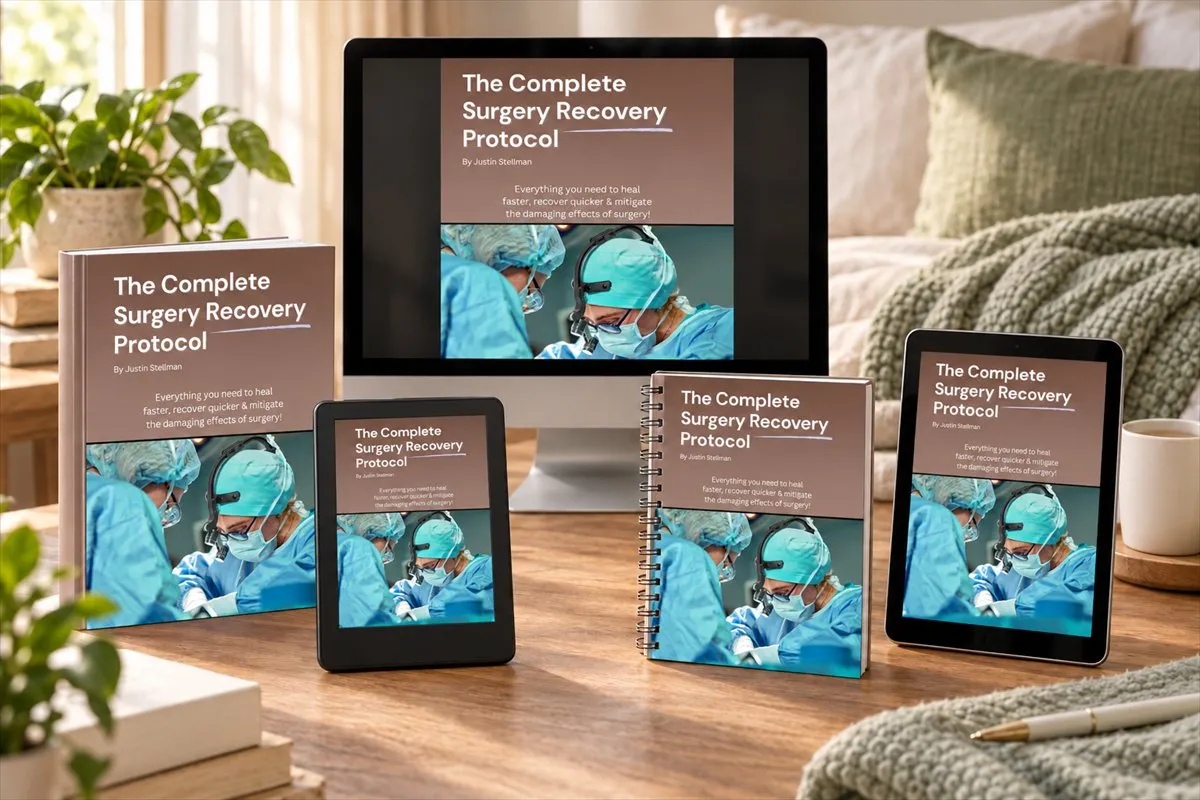
What's Included?
Recovery Starts Before the Day You Enter the Hospital: My roadmap begins about one month before a planned procedure and continues through the weeks afterward. See what I would consider ahead of time, what carries through recovery, and why waiting until you are home may leave important questions unanswered.
The Incision Is Only Half of the Recovery Picture: Most people naturally focus on the wound. I ask you to think about a second major issue too: the anesthesia, antibiotics, and other medications that may be part of surgery. The protocol shows how these two concerns shape my broader recovery plan.
Why I Think About Tissue and the Microbiome Before Surgery: The protocol connects nourishment, probiotics, fermented foods, vitamins, minerals, and tissue-focused nutrients with preparation before the procedure. You will see why I believe the internal terrain deserves attention before the first incision is ever made.
The Unusual Timing Factors I Consider Before Booking Surgery: Why do I prefer an early appointment and, ideally, the first procedure of the day? The protocol explains my reasoning, the outside source I cite about time of day, and my personal timing preference involving the full moon.
What I Would Reach for During the First Days Home: Broth, juices, medicinal mushroom tea, kefir, coconut water, smoothies, colostrum, and other options appear in my first-days nourishment plan. See how I organize these ideas when heavy meals may not be the first thing on your mind.
The 6 Building Blocks in My Personal Connective-Tissue Plan: I lay out the nutrients I personally would consider while rebuilding after surgery, including copper, vitamin C, gelatin, sulfur, silica, and Hawthorn. I also clearly tell you where personal practice ends and direct recommendation begins.
The Incision May Close Before the Scar Conversation Is Finished: My scar section goes beyond watching the wound close. It explores castor oil, red light, MediBody packs, potassium iodide, and neural therapy, along with my personal view of why a scar may deserve continued attention.
What I Consider After Anesthesia, Antibiotics, and IV Medications: The protocol gathers my liver-support and cleansing ideas in one place, from castor oil packs and liver support programs to more involved options. It also helps you identify which ideas may require more preparation or professional guidance.
A Recovery Plan That Still Helps When You Cannot Do Everything: I say plainly that doing a few things is better than doing nothing. If the full list feels overwhelming, I bring the plan back to water, rest, sun, sleep, magnesium baths, nourishing food, self-care, and giving your body room to recover.
STILL unSURE?
Try the Surgery Recovery Protocol for 30 Days
Take time to read the protocol and decide whether Justin's before, during, and after roadmap is useful for you. If it is not the right fit, contact us within 30 days of purchase under the applicable refund policy.
The Surgery Recovery Protocol is a digital informational resource and is not medical advice. It is not intended to diagnose, treat, cure, or prevent disease. It does not replace your surgeon, anesthesiologist, discharge instructions, emergency care, or advice from a qualified healthcare professional. Individual procedures, medical histories, medications, and recovery needs differ. Always discuss supplements, therapies, interactions, and procedure-specific decisions with your medical team.

STILL GOT QUESTIONS?
Frequently Asked Questions
Is this for before surgery, after surgery, or both?
Both. The protocol begins with preparation before a planned procedure, includes a consideration for the day of surgery, and continues through nourishment, connective-tissue rebuilding, incision and scar care, rest, and emotional recovery afterward.
How far ahead should I read it?
If your procedure is scheduled, read it as soon as possible. Justin's longest preparation window begins about one month before surgery, but the protocol also contains shorter preparation steps and substantial post-surgery material.
What if my surgery already happened?
You have not missed the entire value of the protocol. Much of it focuses on the days and weeks after surgery, including nourishment, tissue rebuilding, incision and scar considerations, rest, sleep, and self-care.
Is this just a supplement list?
No. Supplements are one part of it. Justin also discusses food, liquid nutrition, the microbiome, surgery timing, a question for the anesthesiologist, incision and scar care, advanced practitioner options, sleep, sun, rest, and emotional or spiritual recovery.
Does it cover the incision and the scar?
Yes. Justin separates immediate incision support from the later scar phase and discusses the different ideas he considers at each stage.
Does it discuss anesthesia and other medications used during surgery?
Yes. Justin explains why anesthesia, antibiotics, and IV medications form one of his two main recovery considerations, then shares the cleansing and liver-support options he personally explores.
Does this replace my surgeon's instructions?
No. The protocol is informational and is not medical advice. It should not replace your surgeon, anesthesiologist, discharge instructions, or qualified healthcare professional.
Can I use it alongside my medical team's recommendations?
That is the appropriate way to approach it. Use the protocol to understand Justin's research and personal considerations, then discuss relevant supplements, therapies, interactions, and procedure-specific questions with qualified professionals.
Is every idea appropriate for every surgery?
No. Procedures, medications, medical histories, and recovery needs differ. The source itself encourages professional guidance and does not claim that every option is right for every person.
Do I have to do everything in the protocol?
No. Justin specifically says to do as much as you reasonably can and not to panic if you can only choose a few things. The protocol also ends with a simple foundation for someone who cannot take on the larger list.
Will this guarantee that I heal faster or avoid complications?
No. It does not guarantee healing speed, surgical success, scar removal, pain relief, or prevention of complications. It gives you Justin's organized preparation and recovery roadmap for informational purposes.
How is it delivered?
You receive digital access to the Surgery Recovery Protocol after purchase. No physical book is shipped. There is no bonus audio with this protocol.
Copyrights Extreme Health Radio 2025 | Terms & Conditions