
You've Optimized Your Food. But What If Light Is The Foundation You've Been Missing?
The first light in your eyes. The office ceiling. Your phone. Your refrigerator at night. Once you see the pattern, your entire day looks different. A practical digital roadmap for morning sunlight, indoor lighting, screens, sunset, bedroom darkness, travel, meals, exercise, and the everyday exposures most people never question.
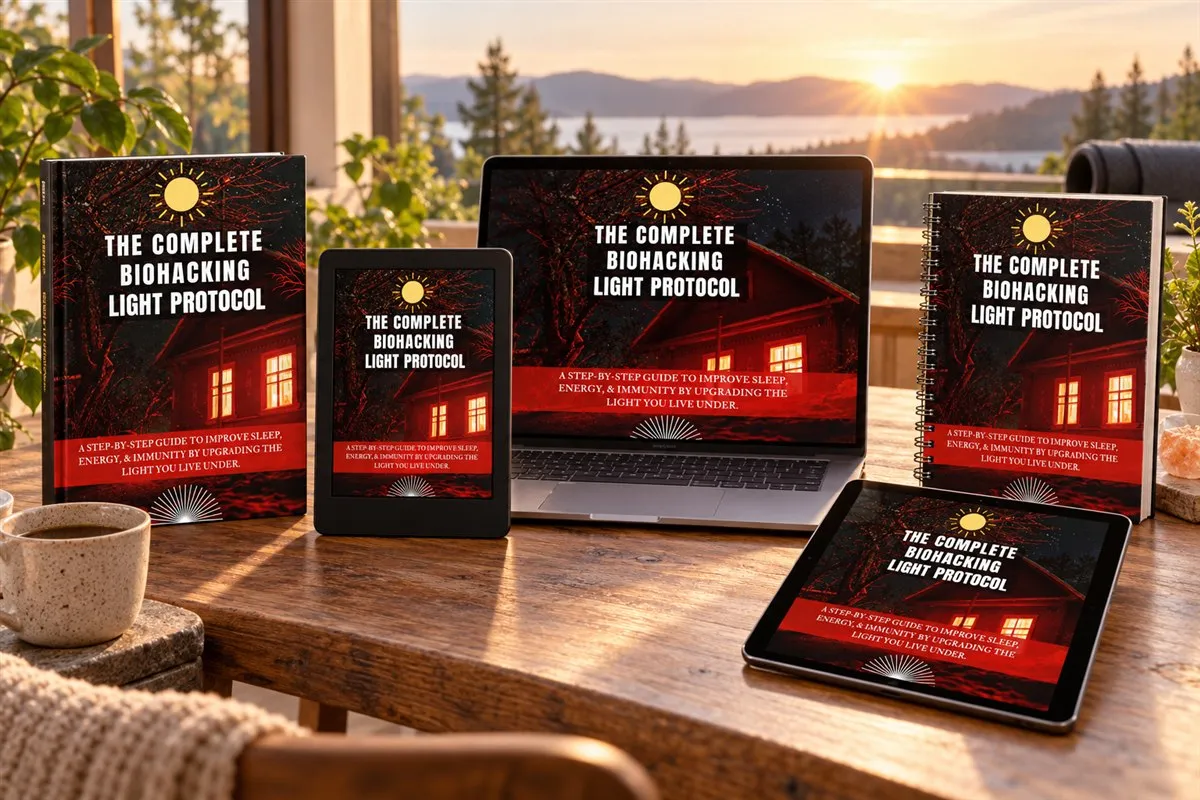
What's Included?
The First Light That Hits Your Eyes May Matter More Than Your Morning Supplement Stack: I start with outdoor, full-spectrum light before screens. See how I handle phones, cloudy mornings, and waking before sunrise, plus why even 1 minute outside can become a practical first step.
Why A Sunny Window Is Not The Same As Going Outside: You can sit beside a bright window all day and still miss the environment I am trying to recreate. I will show you why I treat open windows and quick outdoor breaks differently from ordinary indoor light.
Yellow, Orange, And Red Glasses Are Not Interchangeable: Buying blue blockers is easy. Knowing which color belongs indoors during the day, after sunset, before bed, on a flight, or behind the wheel takes a system. One nighttime driving mistake deserves special attention.
Your Refrigerator And Bathroom Belong In The Evening Light Conversation: Most people think about the phone and forget the tiny lights hiding around the house. See why I pay attention to refrigerator bulbs, device indicators, nightlights, and what happens during a 2 AM bathroom trip.
The Office Problem Is Bigger Than The Screen: Software filters are only one piece. I look at overhead LEDs, fluorescents, windows, outdoor breaks, eyewear, and even skin exposure so you can evaluate the whole room instead of blaming one monitor.
Bright Days And Dark Nights Are Two Halves Of The Same Plan: I do not treat darkness as the absence of a strategy. See how sunset, dimmer evenings, blackout curtains, eye masks, red bulbs, and device lights fit together with stronger daytime exposure.
Red-Light Therapy At The Wrong Time? A red-light panel or vitamin D lamp may look like a smart purchase, but timing still matters in my framework. Learn why I keep specialty light in the daytime instead of treating every hour as interchangeable.
What Meals And Workouts Have To Do With Your Light Environment: Food and exercise do not happen outside the clock. I explore daylight eating, outdoor meals, local and seasonal food, outdoor movement, and why I avoid treating late-night exercise as automatically harmless.
The Travel And Driving Rules Most Blue-Blocker Guides Leave Out: Your destination time, airport lighting, sunset, and nighttime driving do not call for the same response. See how I adjust eyewear while flying and why I never wear orange or red glasses behind the wheel at night.
STILL unSURE?
30-Day Satisfaction Guarantee
Take 30 days to read through the protocol and decide whether it is the right educational resource for you. If it is not, you are protected by the standard 30-day guarantee.

STILL GOT QUESTIONS?
Frequently Asked Questions
Is this just a guide to blue-blocking glasses?
No. Glasses are one tool inside a much larger system. The protocol follows light from the first moments after waking through daytime work, screens, sunset, evening, the bedroom, meals, exercise, driving, flying, specialty light, and night-shift life.
Is this only for people with sleep problems?
No. Sleep is part of the discussion, but Justin's larger focus is the light environment you live under all day. The protocol is for anyone who wants a practical way to evaluate morning light, indoor exposure, screens, darkness, travel, meals, exercise, and daily timing.
What if I work indoors all day?
Justin covers that directly. The protocol discusses open windows when possible, short outdoor breaks, office lighting, yellow glasses, screens, physical filters, overhead bulbs, and realistic ways to work with an imperfect environment.
What if I wake before sunrise or live somewhere cloudy?
There are specific sections for both. Justin explains how he handles red or orange light before sunrise and why clouds, rain, snow, or trees do not automatically cancel the value of getting outside.
Do I need to buy expensive equipment?
No. The protocol includes optional tools and product links, but it also starts with simple actions such as getting outside before the phone, opening a window, changing screen settings, reducing unnecessary light, and beginning with as little as 1 minute.
Does it explain what to do with phones, computers, and televisions?
Yes. Justin discusses phone color settings, Iris Tech, Flux, Twilight, physical screen covers, television filters, and why he often layers a screen solution with protective eyewear.
Does it cover the bedroom and middle-of-the-night light?
Yes. Blackout curtains, eye masks, red bulbs, nightlights, flashlights, device indicators, and bathroom trips all appear in the protocol because the nighttime environment is part of the full-day plan.
Does it discuss red-light therapy and vitamin D lamps?
Yes. Justin explains when he personally uses red-light therapy and a vitamin D lamp, and why he keeps specialty light aligned with daytime rather than using it after sunset.
What about flying, changing time zones, or driving at night?
The protocol includes practical travel and driving guidance. Justin discusses matching light-blocking colors to destination time, what to do in airports, and why orange or red glasses are not his choice for nighttime driving.
What if I work a night shift?
There is a dedicated night-shift section. It focuses on practical mitigation, including natural light after waking, blue-light reduction, daytime sleep darkness, regular timing, movement, food, grounding, and professional support when needed.
Is this medical advice?
No. The protocol is for informational and educational purposes only. It is not intended to diagnose, treat, cure, or prevent disease, and it does not replace care from a qualified healthcare professional.
How is it delivered?
It is a digital protocol delivered by email after purchase. Nothing physical is shipped, and there is no bonus audio for this protocol.
How quickly can I access it?
Access is intended to be immediate after a successful checkout through the delivery email and protocol link.
What if it is not right for me?
You are protected by the standard 30-day guarantee. Read through the protocol and decide whether it is the right educational resource for you.
Copyrights Extreme Health Radio 2025 | Terms & Conditions